Management is symptomatic and multidisciplinary. There is currently no curative treatment for OCLN-related disorder.
Special attention should be given to:
• Seizure management:Given the high rate of drug resistance, early referral to a pediatric epilepsy specialist; combination antiepileptic therapy is frequently required
• Renal surveillance:Regular monitoring of renal function and renal ultrasound, even in the absence of early symptoms
• Screening for diabetes insipidus:Low threshold for assessing serum sodium and urine output; desmopressin should be given once central diabetes insipidus has been confirmed
• Motor management: Physiotherapy for evolving spasticity; orthopedic review if severe
• Feeding and growth:Early feeding/swallowing team involvement; gastrostomy may be required
• Cardiac evaluation:Echocardiography given reported associations with PDA and ASD
• Ophthalmological and audiological assessment: Baseline evaluation and periodic follow-up
• Infection prevention: Given sepsis has contributed to mortality, prompt treatment of intercurrent illness is important
Genetic Counselling
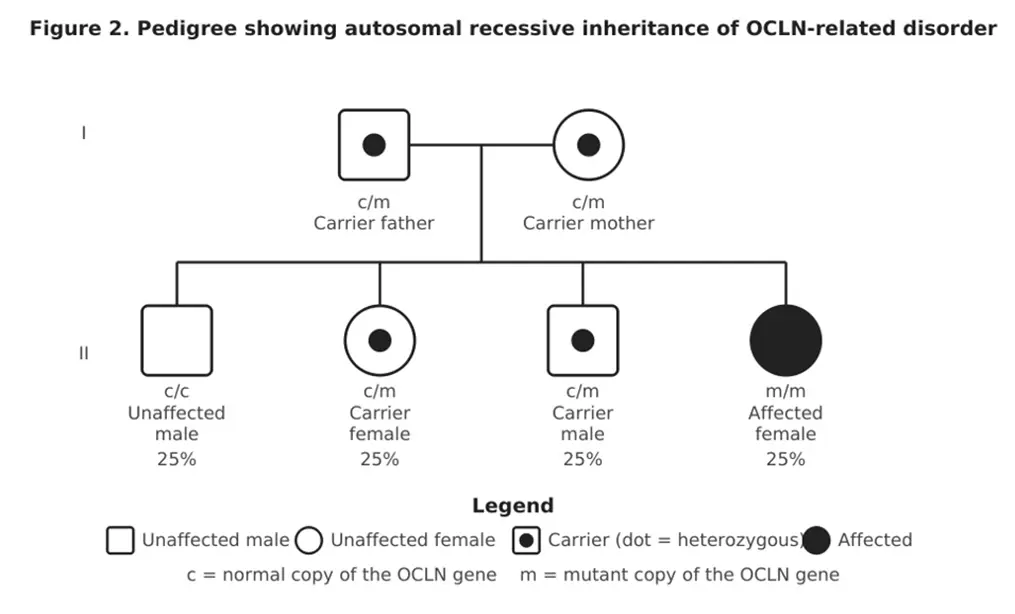
OCLN-related disorder has an autosomal recessive inheritance pattern. When both parents are confirmed carriers, the recurrence risk in subsequent pregnancies is 25% (Figure 2). Prenatal diagnosis and preimplantation genetic diagnosis (PGD) are available once the familial variant is known, although molecular confirmation can be technically challenging (see Molecular Characteristics).
Figure 2:Pedigree showing autosomal recessive inheritance of OCLN-related disorder