Molecular characteristics
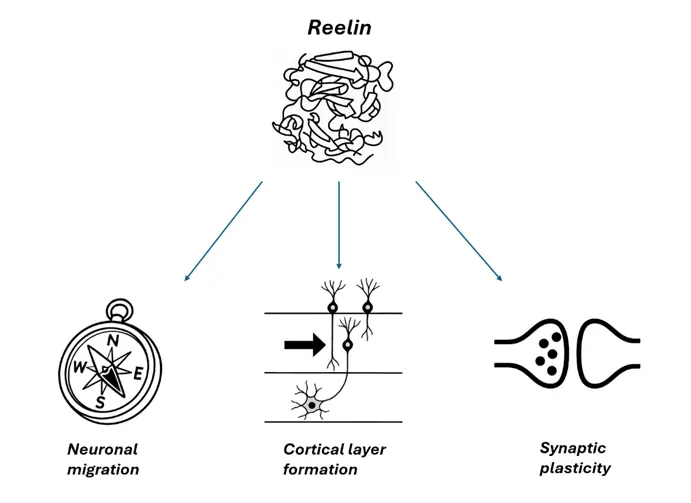
The RELN gene, located on chromosome 7q22.1, contains the instructions to make a protein called reelin. This protein is produced by certain brain cells during development and helps the neurons, move to their correct positions as the brain is forming. This process is essential for creating the brain’s layered structure and for allowing normal communication between neurons. After birth, reelin continues to play an important role in how brain connections work, supporting learning, memory, and coordination.
Figure 2: Biological function of reelin protein
Genetic testing
Changes (mutations) in the RELNgene can be found using modern DNA tests such as next-generation sequencing (NGS). These tests can look at many genes at once (through gene panels) or at almost all codifying genes in the DNA (whole-exome sequencing). In some cases, an even broader test (whole-genome sequencing) may be used. Any RELNchange found must be confirmed with a second test (Sanger sequencing), and family members may be tested to see whether the variant was inherited or occurred for the first time (de novo).
Types of genetic changes
In people who have two changed copies of the RELN gene (homozygous), scientists have found different types of mutations, including ones that stop the protein from working properly or even being produced. In people with only one changed copy (heterozygous), the mutations are usually missense changes, meaning a single “letter” of the DNA code is altered, changing one amino acid in the protein. These changes can affect how the reelin protein folds or functions.
How RELN changes affect the brain
Animal studies first showed how important reelin is: mice models completely lacking this protein (called “reeler” mice) showed a severely disorganized brain because neurons do not migrate properly. Mice with only one working copy of the gene appeared normal on MRI but demonstrated learning or behavioral difficulties, showing that reelin levels are crucial for healthy brain function.
Loss of Function (LoF)
When RELNmutations reduce or stop Reelin production, this is called a LoF effect.
• If both copies of the RELNgene are affected, brain development can be severely impaired. Children may have a smooth brain surface (lissencephaly), underdeveloped cerebellum, severe developmental delay, intellectual disability, and epilepsy that is hard to control.
This happens because the brain cells cannot migrate or settle where they should during early growth.
• When only one copy of RELNis altered, symptoms are milder. These individuals may still exhibit cerebellar and mainly cerebellar abnormalities.
The difference in severity depends on how much normal Reelin the body can still produce.
In some cases, the altered protein may also block the normal one from working properly, a mechanism called a dominant-negative effect. This can make the symptoms slightly worse, even if one gene copy is still working, but the same has been also demonstrated in who has two copies of the change.
Gain of Function (GoF)
In rarer cases, some RELNchanges may make the protein too active, this is called a GoF effect.
Instead of underdeveloped areas, the brain can show abnormal folding or clustering of cells (for example, a condition called polymicrogyria). This happens because too much Reelin activity causes neurons to group together in the wrong way, disrupting normal brain organization and possibly affecting movement, speech, or cognition.
Network Regulation
Reelin doesn’t act as part of a complex orchestra: It helps balance networks that control brain growth, communication, and synaptic activity, and one of the key pathways it interacts with is mTOR, which also plays a role in autism and epilepsy. Changes in RELN can therefore influence different brain functions, contributing to a range of conditions, from neurodevelopmental disorders (like autism and epilepsy) to psychiatric conditions (such as schizophrenia). Some studies have even suggested a link between RELN and neurodegenerative diseases like Alzheimer’s, but more research is needed to fully understand these complex interactions.
Future directions
Research is actively studying new ways to help people with RELN-related conditions, including:
• Using existing drugs that can influence how Reelin and related brain signals work.
• Developing new treatments to boost or replace Reelin, which are already being tested in animal models.
• Exploring gene therapy and RNA-based approaches that may one day correct or bypass harmful mutations.
• Studying each person’s specific RELN variant in detail, to better predict symptoms and design personalized therapies in the future.