
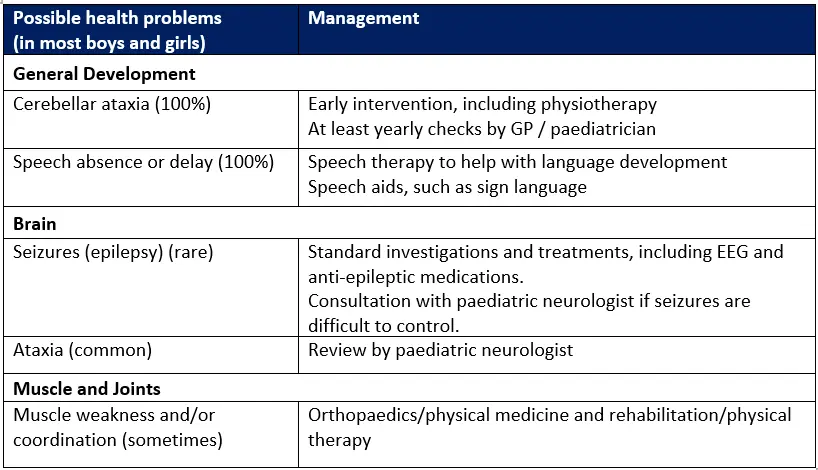
Management
Genetic Counselling
The Lichtenstein-Knorr syndrome has an autosomal inheritance pattern.
• When encountering a patient with early-onset cerebellar ataxia plus sensorineural hearing loss, SLC9A1 should be considered as a candidate gene (especially in consanguineous families).
• Genetic testing: sequencing of SLC9A1(e.g., exome or targeted gene panel) looking for homozygous/compound heterozygous variants; functional confirmation may aid interpretation.
• Because of phenotypic variability, absence of hearing loss does not rule out SLC9A1involvement.
• Heterozygous de novovariants might present with milder or different phenotypes (e.g., seizures) — interpretation requires caution (variant of uncertain significance vs pathogenic).
• Genetic counselling: for the classical syndrome, autosomal recessive inheritance gives 25% recurrence risk for siblings when both parents are carriers.
• There are currently no specific therapies targeting SLC9A1 dysfunction; management is supportive (ataxia rehabilitation, hearing aids/cochlear implants, audiological surveillance).
• Awareness of possible neurodevelopmental or neuromuscular variant phenotypes is important for broadening the diagnostic scope.
If the pathogenic variant occurred de novo (new) in the patient (i.e. it was not detected in the parents), the recurrence risk in subsequent pregnancies of the proband’s parents is generally low (<1%). The genetic ‘carrier’ may pass the variant on to their children, but is unlikely to cause symptoms. Inheriting an abnormal gene from both parents (25% recurrence risk) will cause the disease and can affect males and females equally. Prenatal diagnosis is possible, if requested by the parents.