Management is symptomatic and multidisciplinary. There is currently no curative treatment for UBE3B-related disorder. Special attention should be given to:
• Feeding and growth:early involvement of a feeding/nutrition team given the high frequency of feeding difficulties; low threshold for gastrostomy tube placement if oral intake is insufficient to sustain growth
• Developmental support: early referral to physiotherapy, occupational therapy, and speech/communication therapy (including augmentative communication where verbal speech is absent)
• Seizure management:EEG if seizures are suspected or witnessed; standard anticonvulsant therapy (e.g. valproate, levetiracetam) is usually effective
• Neuroimaging: brain MRI to assess for corpus callosum and other structural anomalies
• Ophthalmological evaluation: baseline assessment and periodic follow-up, given the frequency of refractive errors, strabismus, and microcornea
• Audiological evaluation:hearing assessment (e.g. auditory brainstem response in infancy, audiometry as the child grows), given the high prevalence of hearing loss
• Cardiac evaluation:baseline echocardiography at diagnosis, with follow-up guided by findings; awareness that hypertrophic cardiomyopathy, although uncommon, has been reported
• Respiratory assessment: evaluation for laryngomalacia/tracheomalacia in infants with stridor or respiratory distress; ENT referral and sleep study if obstructive symptoms are present
• Renal surveillance:baseline renal ultrasound given the reported, though infrequent, association with structural renal anomalies
• Biochemical monitoring: fasting lipid profile to screen for hypocholesterolemia; thyroid function testing, particularly in infancy
• Orthopedic assessment:for talipes or other limb anomalies as clinically indicated
Genetic Counselling
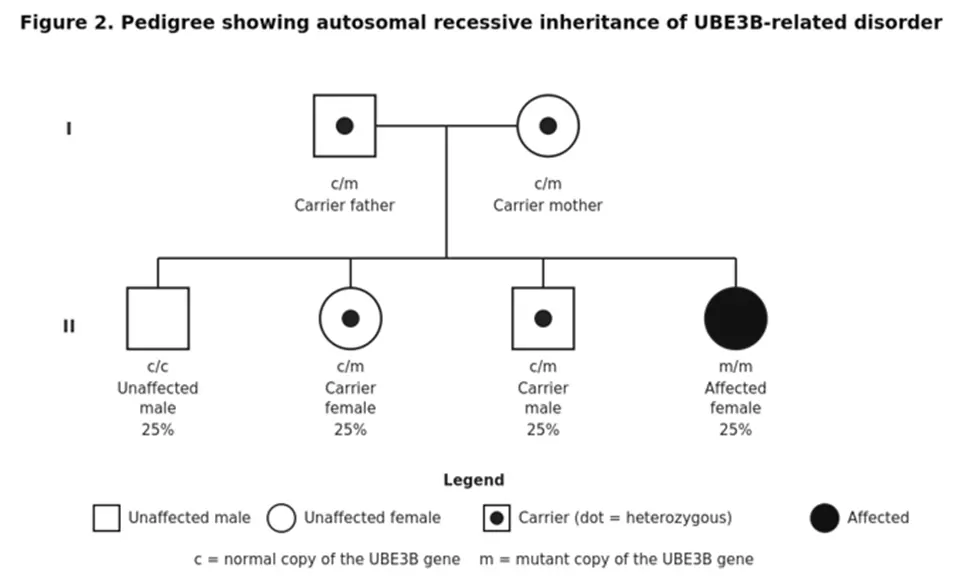
UBE3B-related disorder has an autosomal recessive inheritance pattern. When both parents are confirmed carriers, the recurrence risk in subsequent pregnancies is 25% (Figure 2). Prenatal diagnosis and preimplantation genetic testing (PGT) are available once the familial variant is known; PGT has already been used in at least one reported family.
Figure 2: Pedigree showing autosomal recessive inheritance of UBE3B-related disorder