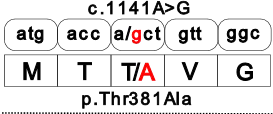
A gene is a small segment of DNA that assembles a sequence of amino acids in the correct order to produce one of the many proteins found in humans. These proteins, in turn, control the formation and proper functioning of our bodies in daily life. All of our DNA is made up of four nucleotides, represented by the letters A, T, G, and C (similar to the letters A–Z of the alphabet). Just as alphabet letters can be combined in different ways to form words with different spellings, these four nucleotides are arranged in various combinations to generate the genetic code. Each gene has its own specific code, which produces specific proteins. Different genes have different ATGC sequences, meaning every protein in the human body has its own unique amino acid sequence. This is why different proteins have different functions in the body.
When the genetic code is passed from parents to their children, all ATGC sequences for each gene are preserved. However, if these sequences are altered by mutations (either spontaneously or through inheritance), this “spelling mistake” in the code can change the protein’s amino acid sequence, which can then alter the protein’s function. Such changes can lead to either increased or reduced protein activity, potentially causing serious effects on the body’s normal functioning.
The UBR5gene produces Ubiquitin-Protein Ligase E3 Component N-Recognin 5, a protein essential for mammalian development. UBR5plays a role in regulating the DNA damage response and transcription. Like all genes, UBR5has a specific sequence of ATGC nucleotides that forms its genetic code. Any change in this sequence—for example, replacing an “A” at position 1141 with a “G”—can lead to a change in the protein’s amino acid sequence (in this example, replacing “threonine” with “alanine” at position 381) or even result in a premature stop in the sequence.
Such simple substitutions lead to reduced function of the UBR5 protein. Since UBR5 is thought to be important for the development, disturbance of UBR5 protein function may result in the drastic change in a patient’s neurodevelopmental features.
The clinical consequences of all UBR5variants are mentioned in the section: “Caregivers - Clinical Characteristics”.