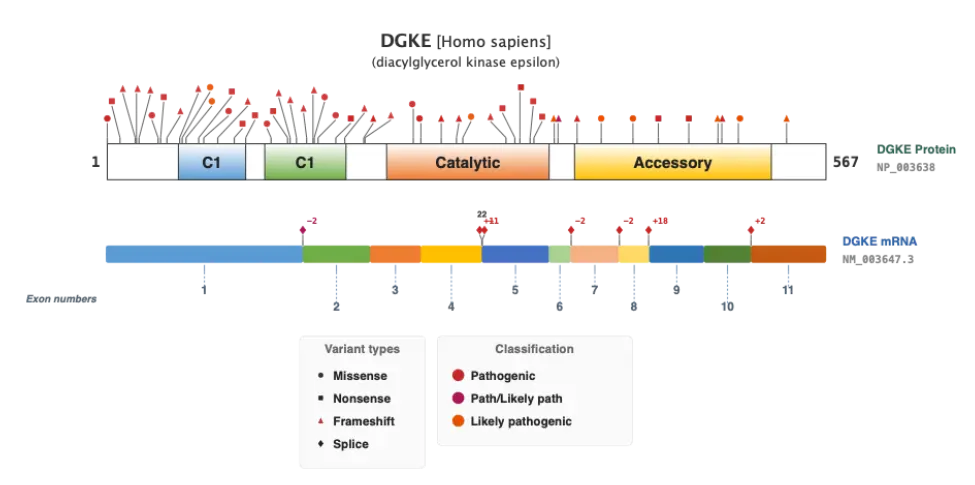
Biallelic DGKE variants inherited in an autosomal recessive manner cause DGKEnephropathy. Reported pathogenic variants include nonsense, frameshift, splice-site, missense, exon deletion, and intronic splice-altering variants (see Figure 3). Most are predicted to cause loss of function.
Figure 3.Array of pathogenic DGKEvariants reported in patients.
Location of the major pathogenic/likely pathogenic DGKEvariants along the protein, showing that there is no clear hotspot. Coding variants are indicated on the protein (top) while splice variants are indicated on the mRNA (bottom).
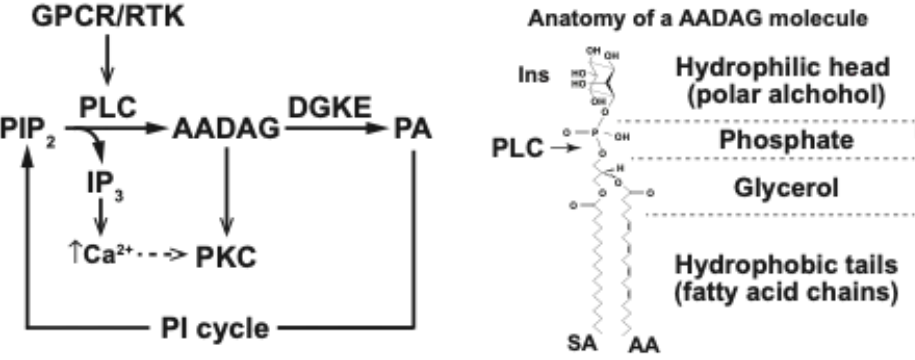
DGKEencodes diacylglycerol kinase epsilon, an intracellular lipid kinase involved in the conversion of diacylglycerol to phosphatidic acid (see Figure 4). It is expressed in glomerular cells, including podocytes, and other studies have also emphad expression in endothelium and platelets. DGKEdeficiency is thought to disturb intracellular lipid signaling and glomerular cell homeostasis, contributing to podocyte dysfunction, endothelial injury, thrombosis, and proteinuria. Overall, DGKE-related disease represents a glomerulopathy that implicates glomerular endothelial cells and perhaps also podocytes, rather than a primary complement dysregulation disorder.
Figure 4.DGKE, diacylglycerol (DAG) and the phosphatidylinositol (PI) cycle
a) Relationship between DGKEand the lipids of the PI cycle. b) Anatomy of 38:4-containing DAG, PA and PIP2. “20:4” indicates a fatty acyl chain of 20 carbons with 4 double bonds.
An important diagnostic point is that noncoding/intronic variants can be pathogenic. This supports consideration of expanded sequencing and splice-aware analysis in unresolved familial or early-onset aHUS.
DGKEtesting should be considered in infants and children with:
• Early-onset aHUS/TMA
• Recurrent HUS with persistent proteinuria
• Nephrotic syndrome or nephrotic-range proteinuria with TMA features
• MPGN-like histology, especially when complement studies are unrevealing